An Aussie’s Guide to Becoming a Digital Nomad
Mar 03, 2026
With the 2026 cost of living in Sydney and Melbourne reaching record highs, many Australians are looking beyond the traditional "Sea Change" or "Tree Change" to find a more balanced lifestyle. The rise of remote work has transformed the digital nomad lifestyle from a niche trend into the ultimate way to escape the big-city grind.
But what is a digital nomad exactly? In essence, it's someone who leverages technology to work remotely and live a location-independent life. They aren't bound by a specific office or city; instead, they travel and work from anywhere with an internet connection. This guide will provide a roadmap to help you navigate the path, meaning everything from choosing the right career to managing your finances and staying productive on the road.
How Hard Is It to Become a Digital Nomad? (The Reality Check)
How working as a nomad actually feels on the ground is often far removed from the filtered photos on your feed. For us, working as digital nomads is supported by a unique safety net: the Reciprocal Health Care Agreements (RHCA). These agreements with eleven countries, including the UK, Italy, and New Zealand, allow Australians to access essential medical treatment abroad—providing much-needed peace of mind while pursuing a fulfilling career on the road. While this benefit is a massive advantage, it doesn't solve every challenge of the location-independent life.
Once the initial novelty of your "Workation" wears off, the true reality check sets in:
- The Discipline Gap: Staying productive when the "surf’s up" is arguably the hardest part of the job. It is often more demanding than a standard 9-to-5 because you are solely responsible for managing your superannuation and professional indemnity insurance, and for ensuring your equipment remains functional in tropical humidity. Without an office structure, your output depends entirely on your self-regulation.
- The Isolation Factor: While independence is a major draw, "homesickness" can strike in unexpected ways. You might miss the nuances of local coffee culture or the ingrained Saturday-morning footy-and-brunch rituals that define Australian social life. Finding a new community requires active effort that can be emotionally draining.
- The "Work" in "Workation": Forget the cliché of the laptop on the beach. In reality, sand ruins electronics, and sun glare makes screens impossible to see. For a sustainable career, reliable Wi-Fi and a professional desk in a dedicated coworking space are the difference between a successful move and a failed holiday.
- Physical Sustainability: Working from makeshift setups in Airbnb kitchens or hotel beds eventually takes a toll on your back. Many long-term nomads eventually seek hot desk rentals or satellite offices to maintain the professional standards their clients expect.
Ultimately, the difficulty level depends on the nature of your work, as some roles demand strict "on-hours" for client meetings while others allow for more asynchronous flexibility.
What Do Digital Nomads Do for Work?
The good news is, the options for how you can become a digital nomad are incredibly diverse! The 2026 Australian job market has seen a surge in remote opportunities within our strongest economic sectors, extending far beyond the traditional "tech-bro" stereotype. Many industry leaders in Mining Tech & Logistics, Renewable Energy Consulting, and AgTech Solutions are now hiring location-independent specialists to drive their global operations.
Here are a few popular career paths well-suited to location independence:
- Freelancing: Offer your skills in writing, designing, programming, or marketing. In the current AU startup ecosystem, "Fractional" leadership roles (such as a Fractional CMO or CFO) have become a highly viable nomad path, allowing you to provide high-level strategy to multiple startups simultaneously.
- Online Business: Start an online business selling products or services. E-commerce and dropshipping are popular options for generating income remotely.
- Remote Employment: Secure a full-time or part-time remote job with a company that embraces flexible work arrangements. With Australia's commitment to the Net Zero transition, Renewable Energy Consulting has become a top-tier remote career, allowing you to audit projects or consult on grid stability from a café in Hobart or a hub in Hanoi.
- Content Creation: Build an audience and generate income through blogging, vlogging, podcasting, or social media.
- Consulting: Offer your expertise in a specific field to clients remotely.
- Teaching Online: Share your knowledge and skills by teaching online courses or providing tutoring services.
Can You Become a Digital Nomad with No Experience?
Taking the leap without a CV full of remote-ready roles can feel daunting, but you can certainly start from scratch. For younger Australians or career-switchers, the key is to start with a "Working from Home" (WFH) trial run within our own borders. Consider moving to a regional hub or a different coast first—like swapping Sydney for a coastal town in WA—to test your discipline and see if the digital nomad lifestyle actually suits your working style before heading overseas.
Focus on "beginner-friendly" remote jobs that prioritise reliability and communication over deep technical expertise:
- Virtual Assistance: Managing schedules and admin for busy entrepreneurs.
- SEO Writing: Crafting content for brands looking to rank on the first page of Google.
- Online Tutoring: Specifically targeting the APAC student market, where the time zones align perfectly with our East Coast.
Instead of worrying about how you can find work with zero background, adopt a "Skill-First" approach. Look into TAFE digital courses or government-subsidised micro-credentials in data analytics and cybersecurity. These short, intensive certifications allow you to bridge the gap and gain industry-recognised credentials before you ever hand in your notice.
Getting Your Digital Nomad Visa
So, how can working remotely across borders actually become legal? This is where the Digital Nomad Visa (DNV) comes in. While many countries are tightening their borders, others are rolling out the red carpet for remote professionals. For Australians, the high-intent phase of becoming a digital nomad usually involves shortlisting destinations that offer a clear legal pathway without the constant stress of "visa runs" to Singapore or KL.
While every country has its own quirks, most applications share a common baseline. You will typically need a clean criminal record, comprehensive international health insurance, and a formal letter from your employer (or client contracts if you're a freelancer) proving your role is 100% remote.
The biggest hurdle, however, is the financial threshold. Eligibility is often pegged to a multiple of the local minimum wage, and requirements can vary significantly by destination:
- Indonesia (E33G / "Remote Worker KITAS"): The classic "Go-To" for Aussies. Indonesia’s E33G visa is a game-changer because it allows Australians to stay for up to a year (extendable for another) without the "visa run" stress that used to be the norm. It’s close to home, shares a similar time zone to WA, and has a large existing Australian community.
- Eligibility criteria: You must prove an annual income of at least USD $60,000 (approx. AUD $84,884) and provide a bank statement showing at least USD $2,000 (approx. AUD $2,829) held for the last 3 months.
- Spain: High appeal for those wanting a European summer base with a path to residency.
- Eligibility criteria: Spain adjuists their income requirements based on the minimum wage, with the minimum required amount equivalent to 200% of the monthly Spanish national minimum wage. If you are travelling with family, an additional 75% of the Spanish minimum wage must be factored for the first family member, then 25% of the Spanish minimum wage for every additional applicant after.
- Japan: Recently launched a 6-month nomad visa specifically for high-earning professionals from 49 countries, targeted at high-earners looking for a "work-life" experience in a country with top-tier infrastructure and culture.
- Eligibility criteria: Documents proving that your annual income is JPY 10 million (approx. AUD 91,200) or more.
- Portugal: Famous for its "Digital Nomad Village" in Madeira and a lower cost of living compared to Sydney.
- Eligibility criteria: The D8 visa requires a monthly income of at least four times the Portuguese minimum wage. In 2026, this is approximately €3,680 per month (AUD $6,100). You must also show significant savings—at least €11,040 (approx. AUD $18,300) in a bank account.
Building a Sustainable Remote Income
Financial stability is the backbone of a location-independent life. For the aspiring nomad, this means looking beyond your monthly paycheck and understanding how to manage your long-term obligations back home:
- Diversify Your Income Streams: Don't rely on a single client or project. Spreading your risk across multiple sources ensures that if one project ends, your nomadic journey doesn't have to.
- Set Realistic Financial Goals: Create a budget that accounts for your travel expenses, local living costs, and long-term savings. Living in a lower-cost country doesn't mean you should spend everything you earn.
- Superannuation & Taxes: If you are a freelancer working for overseas clients, you are essentially your own payroll department. It is vital to manage your own Super contributions to avoid a massive gap in your retirement savings. Furthermore, you must navigate the ATO’s "Resident for Tax Purposes" test. Generally, if you leave Australia but don’t establish a permanent, "durable" home elsewhere, the ATO may still consider you a tax resident, meaning you might still owe tax at home on your global earnings.
- Banking & Medicare: Avoid the "Big Four" bank fees by switching to travel-friendly accounts like Up Bank, Macquarie, or Wise. These digital-first options often offer better FX rates and zero international transaction fees, which helps in finding work and getting paid in foreign currencies. Additionally, check your private health insurance; you might need to suspend your domestic cover while away to save on premiums, provided you have adequate international protection.
- Save and Invest: Prioritise long-term financial stability by investing a portion of your income. Being proactive with your private investments is essential for a comfortable retirement since you won't have an employer automatically handling your Super.
Tips for Thriving as an Aussie Digital Nomad
Successfully navigating the digital nomad lifestyle requires more than just a powerful passport; it demands a shift in how you maintain your health and work-life boundaries. Transitioning from a structured office to a location-independent life means grouping your traditional habits with a new local context. While specific skills vary depending on your career, here are some essential considerations for Australians on the road:
- Stay Healthy Beyond the Border: Prioritise your physical well-being by securing high-grade international health insurance. Medicare has significant limitations once you leave Australian shores, and standard "7-day travel insurance" won't suffice. Look for a policy that specifically covers "Remote Work Equipment"—if your laptop is stolen in a café, your ability to earn an income vanishes.
- Localise Your Time Zone Strategy: Australians are perfectly positioned for the APAC market, but your daily rhythm depends on your client base. You might find yourself on the "Sunrise Shift" if you're working for NZ or Fiji-based firms, or conversely, the "Late Shift" (starting at 6 PM) to align with UK and European markets. Understanding how working in these windows affects your social life is a key part of staying sane abroad.
- Establishing a Routine: To prevent burnout, separate your "travel self" from your "work self." Maintaining a sense of normalcy is easier when you have a go-to ritual. Many nomads find that visiting a gym before work provides the mental clarity needed to tackle a day of deep work in a new city.
The Importance of a Productive Workspace
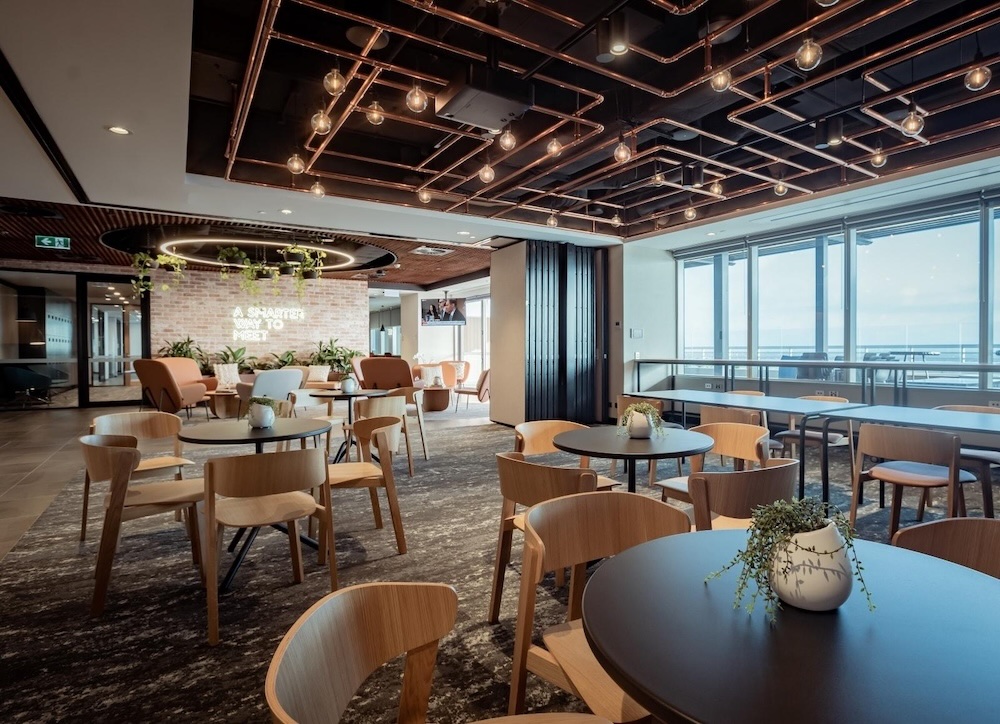
While the freedom of working from anywhere is a major draw for any digital nomad, the lack of a dedicated environment can quickly hinder your output and well-being. This is where the transition from a "laptop on a beach" fantasy to a functional reality occurs. Relying on patchy café Wi-Fi is rarely sustainable, which is why a professional coworking space has become essential infrastructure for location-independent professionals.
The Work Project provides a seamless global network that supports this lifestyle across major business hubs. Whether you need a place to meet high-value clients between stints in Europe or simply want to touch base with your local team, having access to hot desk rentals or a formal satellite office provides the stability of a high-end work environment.
Becoming a digital nomad is an exciting journey that offers immense personal growth, but it requires more than just an itinerary. Before you commit to a one-way ticket and trade the familiar for the unknown, it is wise to "test the waters" of a remote setup.
Ready to embrace the lifestyle? Explore our flexible workspace options and meeting rooms for rent today to create a fulfilling nomadic experience that actually works!