Singapore Work Culture: A Guide to Workplace Norms and Hours
Aug 05, 2026

Singapore work culture is defined by three forces operating at once: a multicultural workforce spanning Chinese, Malay, Indian and expatriate professionals, a meritocratic system inherited from the country's economic development model, and a regulatory framework that balances productivity with employee wellbeing. Together, these forces make Singapore one of Asia's most distinctive professional environments.
Whether you are a foreign professional preparing for a Singapore posting, a new graduate entering the workforce, or a business setting up a local operation, understanding how Singaporean office culture functions in practice matters more than any policy document can convey.
This guide walks through the defining norms, the working hours that shape a typical week, the regulatory shifts reshaping the employment relationship, and what makes Singapore a genuinely strong place to build a career.
What Defines Singapore Work Culture
Singapore’s multicultural workforce features Chinese, Malay, Indian and expatriate professionals operating side by side in the same teams. English serves as the default working language across virtually every sector, which helps to facilitate daily communication and remove barriers despite the workforce’s multicultural nature.
Workplace culture can vary by employer type. For instance, global MNCs headquartered in Singapore tend toward flatter hierarchies and Western-influenced norms, while local SMEs, government-linked corporations and statutory boards generally retain more traditional structures built around hierarchy, deference and process.
What are the Core Features of Singaporean Office Culture?
A Clear Sense of Hierarchy and Respect for Authority
Singapore is widely recognised as a higher power-distance culture, where titles, seniority and chain-of-command are taken seriously.
Junior staff are generally expected to defer to senior colleagues in formal settings, which shows up in small but consistent ways: waiting to be invited into a decision rather than asserting an opinion unprompted, and routing communications upward through the proper channel rather than skipping a level to get a faster answer.
MNC environments tend to soften the formality, but the underlying expectation of respect for seniority holds constant across almost every workplace.
A Collectivist, Team-First Orientation
Singapore's workplace culture leans collectivist. Decisions are generally made in consultation with the team, credit is shared rather than claimed, and visible self-promotion is viewed less favourably than quiet, consistent competence.
In practice this means consensus tends to get built before a meeting rather than debated openly within it, colleagues are expected to cover for one another without being asked, and individual achievements are usually framed in terms of what the team delivered together.
Professional Dress Codes
Dress norms follow the sector. Banking, law and government-linked roles generally call for business formal: a suit and tie or the equivalent.
Most professional services and tech firms sit in business casual territory, a collared shirt, smart trousers and closed shoes.
Creative industries and startups run smart casual.
Communication Norms: Direct But Face-Conscious
Singaporean workplace culture in terms of communication is efficient and outcome-focused, but carries a strong undercurrent of face-saving inherited from the country's Chinese, Malay and Indian cultural roots.
Disagreement is rarely voiced bluntly in front of others. Difficult feedback tends to move to a private conversation rather than a public one, a "yes" in a meeting can mean "I heard you" rather than "I agree", and emails stay polite and formally structured even between colleagues who know each other well.
Punctuality and Process Discipline
Singaporean office culture places a high value on punctuality, deadline adherence and process compliance, an extension of the country's broader cultural emphasis on order and reliability.
Arriving late to a meeting without notice, missing a deadline or skipping a documented process tends to damage professional standing faster here than in many other markets. It is one of the clearer adjustments foreign professionals are advised to make early, and one of the easiest to get right.
What are the Working Hours in Singapore?
The standard Singapore workweek runs Monday to Friday, with a typical contractual day of eight to nine hours. The Employment Act caps covered employees at 44 hours a week, with overtime compensated at an enhanced rate and a mandatory weekly rest day built into the arrangement.
Lived hours vary by sector. Knowledge-based industries such as financial services, information and communications technology and professional services tend to cluster close to the contractual standard. Construction, manufacturing and food and beverage typically run longer schedules built around shift patterns and operational demands.
Is Singapore a Good Place to Work?
Singapore consistently ranks among the most attractive professional destinations in Asia thanks to a few factors.
Competitive Salaries and Strong Earning Potential
Singapore offers some of the highest salary benchmarks in Southeast Asia, particularly in finance, technology and professional services, where total packages frequently include performance bonuses, equity participation in MNCs and a structured year-end payment through the Annual Wage Supplement. The country's role as a regional headquarters hub creates a deep market for senior and specialist roles, which sustains upward salary pressure for skills in demand.
A Favourable Personal Tax Environment
Singapore's personal tax regime is widely regarded as one of the more favourable in the developed world. Rates are progressive, there is no capital gains tax, and territorial tax treatment exempts most foreign-sourced income from local taxation. This is a meaningful reason regional headquarters cluster here, which in turn creates a denser market for senior professional roles relative to the size of the country's own population.
Strong Career Advancement Pathways
Singapore functions as a high-mobility labour market for professionals in growth sectors. Regional remits attached to local roles, exposure to senior decision-makers and the sheer density of MNC headquarters create advancement pathways that are difficult to replicate elsewhere in Southeast Asia. That mobility comes with an expectation of continuous upskilling, supported by national initiatives like SkillsFuture, which gives Singaporeans subsidised access to professional training and credentials.
An English-Speaking, Internationally Connected Environment
English is the official working language across business, government and the courts, removing one of the primary barriers foreign professionals face in other Asian markets. Singapore's role as a regional hub also means most professionals end up working across multiple Southeast Asian markets over the course of a career, building the kind of regional experience and network that compounds in value over time.
Where You Work Shapes How You Work
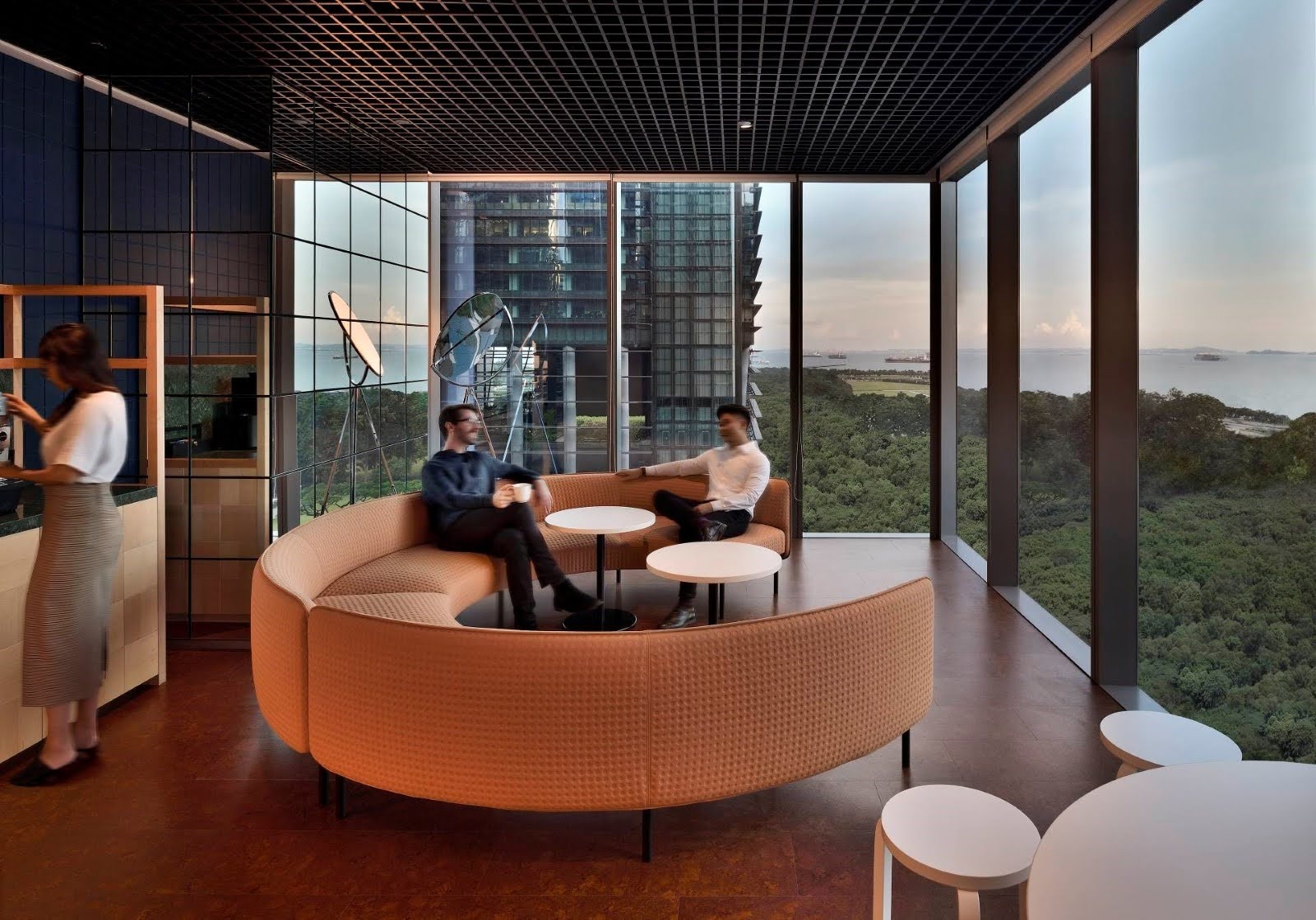
The physical environment a professional operates in is a meaningful part of how Singapore work culture is actually experienced day to day. Proximity to clients, exposure to senior decision-makers and the credibility a business address signals are all part of the equation.
For independent professionals, growing SMEs and regional teams setting up a Singapore footprint, flexible workspace now makes it possible to access prime CBD locations without committing to a traditional long lease. The Work Project's coworking locations sit inside Grade A buildings across Singapore's Downtown Core, positioning professionals alongside the city's leading employers and inside the same buildings that anchor its most active hiring sectors.
Companies establishing or scaling a Singapore operation can choose from office rental options ranging from plug-and-play private offices to fully customised suites, while professionals who need a credible local address without a physical desk can turn to virtual office rental services to register the business, receive mail and meet clients at a premium Downtown Core location.