How to Find Investors for Your Startup in Australia
Jun 15, 2026

If you are asking the question: “how to find investors for a startup in Australia”, founders typically work through three channels: angel investor networks, venture capital firms and government-backed co-investment programmes. The right channel depends on your startup stage, what sector it’s in and how much capital your startup or business idea needs.
Most startup funding in Australia is concentrated around the Sydney and Melbourne area with growing investor activity in Brisbane. Competition for capital in Australia is challenging. According to the State of Australian Startup Funding, a total of A$5.48B was raised across 390 deals in 2025.
Generally, startup founders who successfully raise capital treat funding as a targeted exercise rather than a volume game. In order to be successful, you can’t just target everyone. Instead, you need to know who or what to target and tailor your application to increase your chances of success.
Identify Your Startup Stage and Funding Needs
Your funding stage determines which investors will take a meeting and how much they may be willing to put in. Australian startup funding typically follows three stages:
- Pre-Seed: Founders raising on a business idea or early prototype most often attract angels, micro-VCs and accelerator-linked funds writing cheques of A$25,000 to A$2 million on the strength of the founding team and a validated problem
- Seed: Rounds extend to A$500,000 to A$3 million as dedicated seed funds enter, expecting early traction and a clear go-to-market plan
- Series A: Institutional venture capital firms lead rounds of A$3 million to A$15 million, with demonstrated traction, recurring revenue and a credible path to scale required to clear the diligence bar
Types of Investors You Can Approach in Australia
Investors in Australia can be broadly put into three categories: angel investors, venture capital firms and government-backed programmes. Each investor will have different capabilities with regards to funding, and how much progress they expect to see, and how much equity or even share of the profits they may expect to receive.
Angel Investors
Angel investors in Australia are experienced individuals investing personal capital into early-stage startups, typically at the pre-seed and seed stage.
- Profile: Experienced operators and high-net-worth individuals, often investing through syndicates that pool several angels into a single round
- Typical Funding Amounts: A$25,000 to A$250,000 per deal
- What Kind of Projects They Back: A strong founding team, a validated concept and a clear path to revenue rather than perfectly polished projections
- How to Get Access: Founder networks, advisor introductions and groups such as Sydney Angels, Melbourne Angels and Scale Investors that run regular pitch nights for vetted founders
- What to Know: Angels write smaller cheques than VCs but bring operating experience and warm introductions to follow-on investors
Venture Capital Firms
Venture capital firms in Australia are institutional funds backing startups with high growth potential, from seed through to later-stage rounds.
- Profile: Institutional funds that specialise by stage and sector, backing companies that can credibly scale to international markets
- Typical Funding Amounts: A$500,000 to A$2 million at seed, A$3 million to A$15 million at Series A
- What Kind of Projects They Back: Market size, scalability beyond the domestic market, founders with proven execution ability and a credible exit pathway
- How to Get Access: A warm introduction from a portfolio founder or trusted advisor, after researching the fund's existing portfolio for stage and sector fit
- What to Know: Sector specialisation is non-negotiable. A climate tech fund will not lead a fintech round regardless of how strong the pitch is
Government-Backed and Co-Investment Programmes
Government grants in Australia provide non-dilutive funding that supplements private investment, with federal and state programmes supporting early-stage research, commercialisation and innovation.
- Profile: Federal and state schemes offering non-dilutive capital to early-stage and innovation-focused businesses
- Typical Funding Amounts: Highly dependent on individual programmes, but is typically awarded in the form of tax breaks or co-matching. Typically up to A$100,000.
- What Kind of Projects They Back: Projects with genuine novelty, commercialisation potential and a strong project plan
- How to Get Access: Direct application through government websites or state-level programmes.
- What to Know: Government funding strengthens a private round rather than substituting for it, so the work on pitch deck, team and traction still has to be done
Where to Actually Find Investors in Australia
The most reliable way to find investors for your startup in Australia is through warm introductions from people the investor already trusts. Cold outreach can work, but a referral is much more likely to get your proposal heard.
Australian founders typically find investors through:
- Warm introductions from advisors, portfolio founders or co-investors in the target fund
- Accelerator demo days run by programmes such as Startmate, Antler and the CSIRO ON Accelerate
- Pitch competitions or industry events organised by state-level innovation bodies
- Online investor directories including Crunchbase, AngelList and LinkedIn
Essential Preparations Before Reaching Out to Investors
In order to successfully woo Australian investors and secure funding, there are a few things that founders must prepare for a successful pitch. They are:
- Pitch Deck: A 10 to 15 slide deck covering the problem, solution, market size, traction, team, business model, competitive landscape and the funding ask
- Financial Models: 18 to 24 month projections with clear unit economics, monthly burn, gross margin and the path to the next milestone
- Proof of Concept or Evidence of Traction: Current metrics that demonstrate momentum, including revenue, user growth, retention or signed letters of intent with named customers
- Funding Amount and Purpose of Funding: A defined amount, a breakdown across hiring, product, sales and operations and the milestones the capital funds before the next raise
- Supporting Documents: Supporting documents such as incorporation paperwork or proof of customer contracts for due diligence.
- Risk Assessment: The biggest unknowns the business faces and honest answers on how each will be managed
Support Your Journey to Get Funded at The Work Project
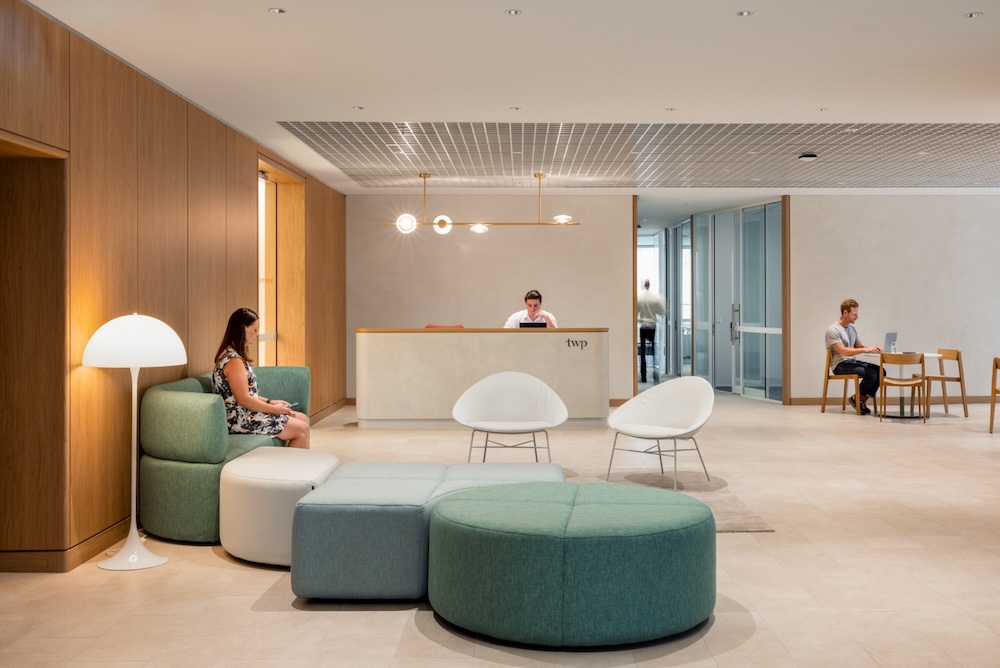
A founder raising capital benefits from a workspace that holds up under investor scrutiny. The address on the meeting invite, the lobby the partner walks through and the room the pitch happens in all shape the impression that forms before your pitch begins.
The Work Project provides hospitality-inspired environments across investor hotspots in Australia to support the kind of work that fundraising rounds demand. Whether you’re looking to rent a meeting room in Sydney for a big pitch, or finding a hot desk in Melbourne, find the space you need to scale your startup with us.
Book a tour at a nearby coworking space today to see how The Work Project fits your fundraising stage.